
If I were shopping for the best sport UTV for a mix of American trails, rocky sections, and occasional open ground, I’d start with the 2027 Polaris RZR XP 1000 Sport. Its 64-inch width, 90-inch wheelbase, and $19,999 US starting MSRP make it a practical two-seat shortlist candidate. My closest comparison would be the 2027 Can-Am Maverick X3 DS Turbo: it starts at the same $19,999 MSRP but trades the RZR’s shorter footprint for turbocharged power and more listed suspension travel. If your rides are mainly faster, rougher desert stretches, I’d move the X3 ahead.
That’s a conditional pick, not a claim that one machine beats everything. A 50-inch trail limit rules out both. Four passengers change the wheelbase, seating, and price comparison. And a wide-open desert rig is a different purchase from a weekend trail machine. Here’s how I’d narrow the choice before spending the money.
Best sport UTVs at a glance
| US model and exact trim | Seats | Overall width | Starting MSRP | I’d shortlist it for |
|---|---|---|---|---|
| 2027 Polaris RZR XP 1000 Sport | 2 | 64 in. | $19,999 | Mixed recreational trails; shorter two-seat footprint |
| 2027 Can-Am Maverick X3 DS Turbo | 2 | 64 in. | $19,999 | Faster rough trails and open terrain |
| 2027 Polaris RZR Trail Sport | 2 | 50 in. | $16,999 | Routes with an applicable 50-inch limit |
| 2027 Polaris RZR XP 4 1000 Sport | 4 | 64 in. | $22,999 | Four-seat trail riding without a 72-inch-wide machine |
| 2027 Can-Am Maverick R X | 2 | Over 78 in. | $39,699 | High-budget, wide-open desert riding |
Prices are published US starting MSRPs checked November 5, 2026, not dealer quotes or out-the-door totals. Every row names its model year; the vehicles are not all 2026 model-year machines just because you’re shopping in 2026. Widths refer to the vehicle’s overall width, not its suspension’s advertised stance or travel. Check your exact local trail rules and dealer quote before ordering.
A Closer Look at the 5 Best Sport UTVs

These five sport UTVs serve different riders. The biggest differences aren’t just horsepower or price. They’re how much room you have to ride, the terrain you tackle, and how many passengers you need to carry. Here’s what I’d consider before choosing each one.
1. 2027 Polaris RZR XP 1000 Sport — Best for Everyday Trail Riding
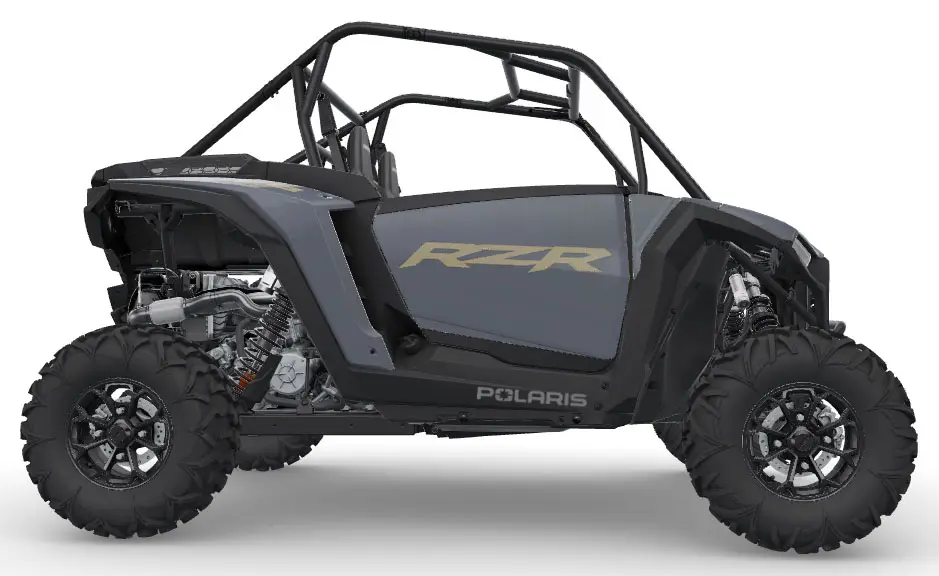
The RZR XP 1000 Sport is my first choice for someone who rides a mix of wooded trails, rocky sections, and open terrain. Its 114-hp engine, 64-inch width, and 90-inch wheelbase offer a useful balance of power and a relatively compact two-seat footprint.
It also comes with adjustable Walker Evans shocks, 14 inches of ground clearance, and a geared reverse transmission. Those are useful features when trails get rough or you need to maneuver around obstacles.
The trade-off: Its closest rival, the Can-Am Maverick X3 DS Turbo, offers more horsepower for the same $19,999 starting MSRP. I’d choose the Polaris if shorter overall length and tighter turning space matter more than extra engine output.
Check the 2027 RZR XP Sport specifications.
2. 2027 Can-Am Maverick X3 DS Turbo — Best for Faster, Rougher Trails
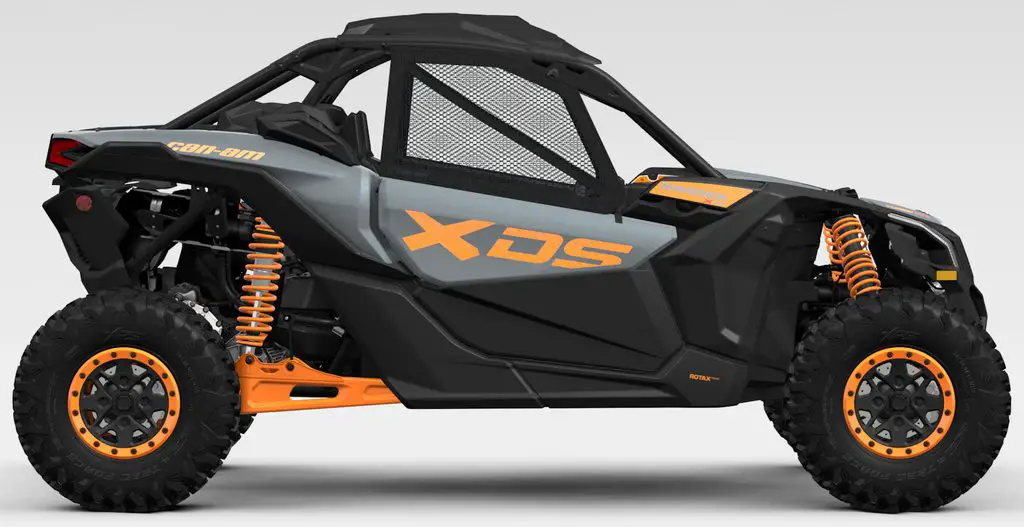
The Maverick X3 DS Turbo is worth considering if you spend more time on open, uneven terrain than winding wooded trails. Its 135-hp turbocharged engine, 20 inches of front and rear suspension travel, and 30-inch tires give it a strong performance-oriented specification.
At 64 inches wide, it occupies the same width category as the RZR XP Sport. However, its 102-inch wheelbase is 12 inches longer, which makes vehicle length and maneuvering space worth checking before buying.
The trade-off: The X3 offers 21 more advertised horsepower at the same starting MSRP, but that doesn’t automatically make it better on tight trails. I’d favor the X3 for faster, rougher terrain and the shorter RZR XP for more confined riding areas.
See the 2027 Maverick X3 specifications and available trims.
3. 2027 Polaris RZR Trail Sport — Best for Narrow Trails
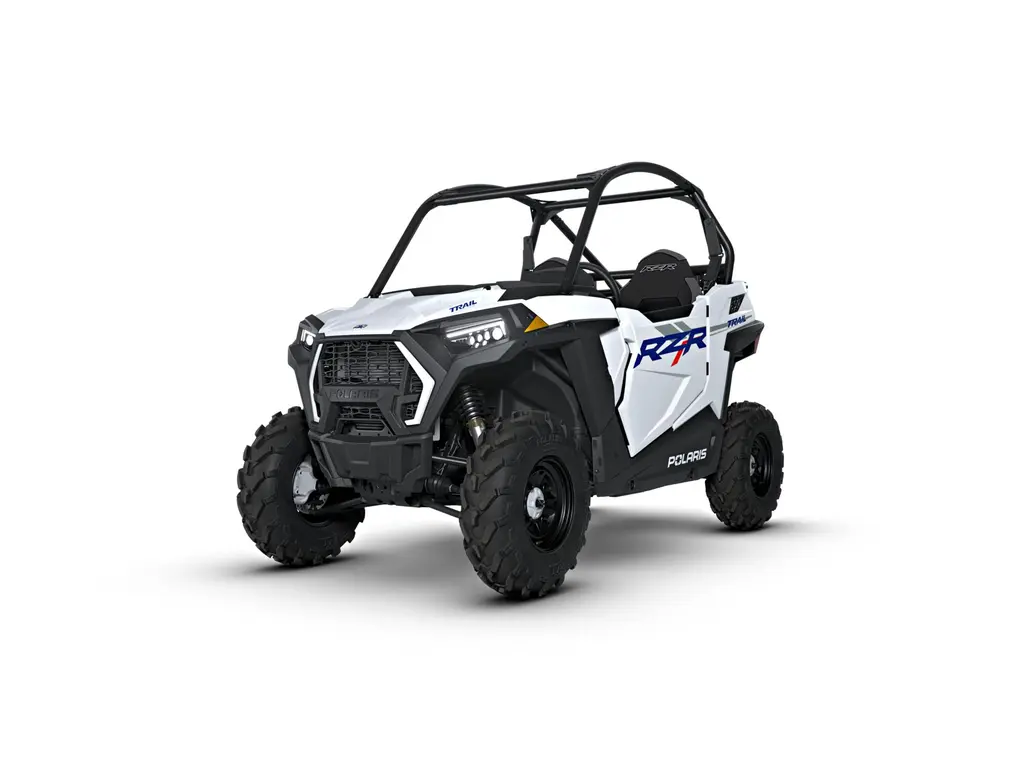
The RZR Trail Sport is the most practical choice here when your riding area has a 50-inch vehicle-width limit. It’s only 50 inches wide, compared with 64 inches for the RZR XP and Maverick X3.
Its 75-hp engine, 79-inch wheelbase, power steering, and 10 inches of front and rear suspension travel suit a different purpose: navigating narrower trails rather than chasing maximum performance on open ground.
The trade-off: You give up horsepower and suspension travel compared with the wider sport machines. But if a route has an enforced 50-inch limit, those wider options aren’t suitable regardless of their performance. Always confirm the land manager’s current access rules.
If this is your main type of riding, I’ve compared additional options in my guide to the best small UTVs.
Check the 2027 RZR Trail Sport specifications.
4. 2027 Polaris RZR XP 4 1000 Sport — Best for Four Passengers
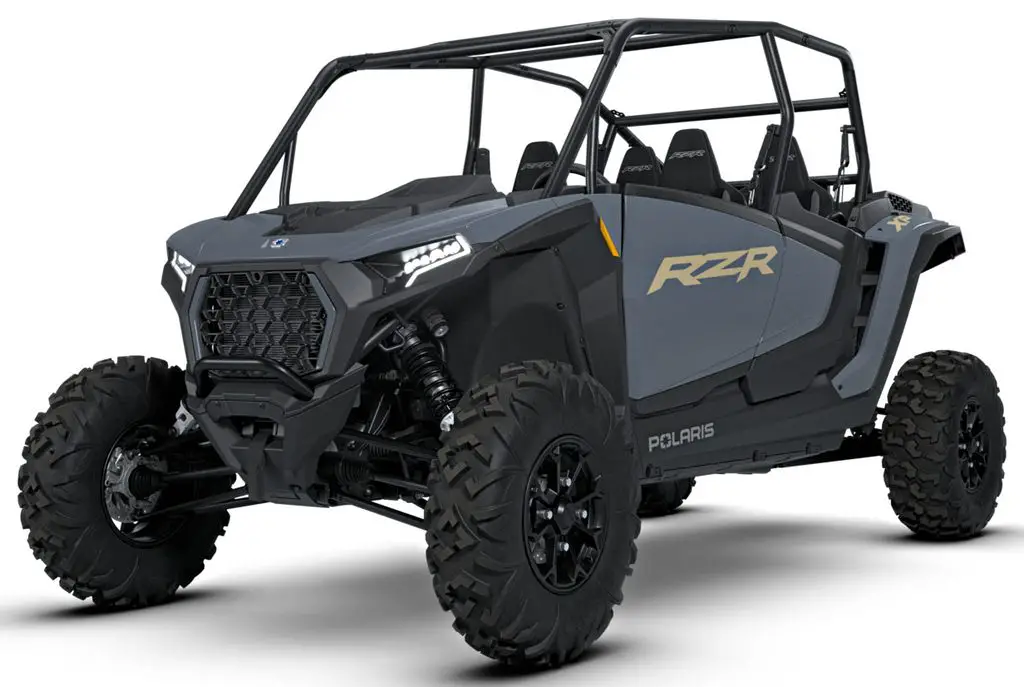
The RZR XP 4 1000 Sport makes sense when you regularly need four seats but still want a sport-oriented machine. It uses the same 114-hp engine and 64-inch width as the two-seat XP Sport, with a longer chassis to accommodate the additional passengers.
Its 117-inch wheelbase is 27 inches longer than the two-seat model’s, and the vehicle measures 146.9 inches overall. That extra length matters when turning around, loading onto a trailer, or navigating tight switchbacks.
Polaris lists a 900-pound total payload capacity, including passengers, cargo, and accessories. Four occupants weighing 200 pounds each would leave only 100 pounds of rated payload for everything else.
The trade-off: At $22,999 starting MSRP, you’re paying $3,000 more than the two-seat XP Sport for the additional seating. I’d choose it only if you genuinely need those seats. Otherwise, the shorter two-seat machine is easier to accommodate on tighter routes.
See the exact 2027 RZR XP 4 Sport dimensions and capacities.
5. 2027 Can-Am Maverick R X — Best for Wide-Open Desert Riding
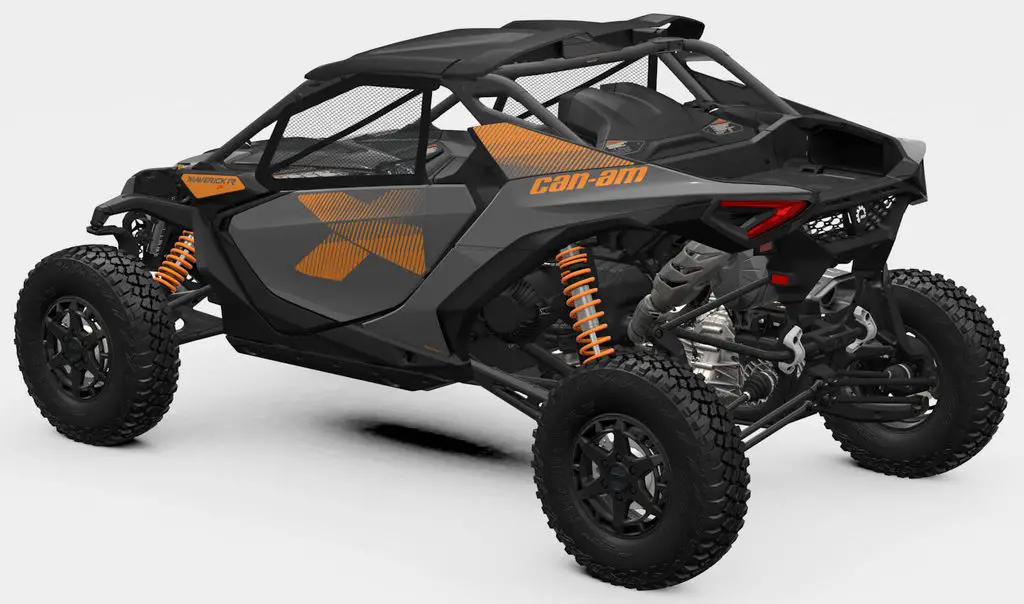
The Maverick R X is a different class of sport UTV. It combines a 240-hp turbocharged engine with a seven-speed dual-clutch transmission, 32-inch tires, and 25 inches of front and rear suspension travel.
Those specifications make it a serious option for buyers prioritizing high-performance desert and dune riding. Its 2027 transmission also includes an extra-low range, giving the machine more flexibility in slower, demanding terrain.
The trade-off: At more than 78 inches wide, it isn’t appropriate for width-restricted trails. Its $39,699 starting MSRP is also $19,700 above the RZR XP Sport and Maverick X3 DS Turbo.
I’d only put the Maverick R X on my shortlist if I had access to suitably wide riding areas and specifically wanted its power, suspension, and dual-clutch drivetrain. For ordinary recreational trails, the less expensive 64-inch machines make more sense.
Explore the 2027 Maverick R X configuration and pricing.
Before you buy: All prices above are starting US MSRPs, not out-the-door prices. Ask dealers for written quotes including destination, setup, taxes, and other fees. If hauling equipment, towing, or farm chores matter more than recreational performance, compare work-focused UTVs before committing to a sport model.
Why I’d start with the 2027 RZR XP 1000 Sport
The 2027 RZR XP 1000 Sport puts a 114-horsepower, naturally aspirated engine, a 64-inch overall width, and a 90-inch wheelbase in one two-seat package. It’s not a 50-inch trail machine, but the shorter wheelbase is relevant when you’re negotiating turns and tight rock lines. Compared with the X3 DS’s 102-inch wheelbase, that’s 12 fewer inches between the axles. That difference is a useful reason to compare steering and breakover behavior on the trails you actually ride; it’s not proof of a measured turning-circle win.
There is meaningful ride evidence, although not for this exact 2027 base trim. UTV Guide’s Jon Crowley drove a 2024 RZR XP Ultimate for roughly 500 miles across Nevada sand, Arizona trails, and Utah rocks. He praised its nimble handling, turning radius, and low-range usability, while noting engine noise and wishing for better shocks when pushing harder. That was an Ultimate, not a 2027 Sport; its equipment and the test conditions shouldn’t be passed off as a present-day head-to-head win.
For a buyer spending around $20,000 before fees, the XP Sport’s strongest realistic rival is the 2027 Maverick X3 DS Turbo. Both have a stated 64-inch width and $19,999 base MSRP. Can-Am lists 135 horsepower and 20 inches of suspension travel front and rear, while Polaris lists 114 horsepower and 16 inches of front wheel travel and 18 inches at the rear for the XP Sport. Polaris also markets a larger figure as usable travel; I wouldn’t compare that number directly with wheel travel as though they were identical measurements.
Choose the RZR first if tighter recreational trails, low-speed technical sections, and a shorter two-seat chassis matter more than outright engine output. Choose the X3 DS instead if your typical ride is faster and bumpier, and you want its turbocharged engine and suspension specification without paying a higher starting MSRP. The final call still deserves a demo on representative terrain, because these published numbers cannot measure steering feel, fatigue, or ride comfort for you.
When the Maverick X3 DS Turbo is the better buy
The 2027 Can-Am Maverick X3 DS Turbo is not the 200-horsepower Turbo RR trim. The regular DS Turbo makes 135 horsepower, uses a pDrive/QRS-X belt-type CVT, and comes with Smart-Lok front-differential control and SHOWA HPG 2.5 shocks. Its listed 102-inch wheelbase is longer than the RZR XP’s 90 inches. Both fit the same nominal 64-inch width category, but they don’t have the same footprint or engine character.
I wouldn’t use an old shootout as if it settled this new comparison. UTV Action’s older RZR XP Turbo versus X3 X DS test reported a stronger X3 impression over whoops and dunes, with the RZR more comfortable in tighter, slower areas. Those were different, older turbo trims, so the test helps explain the terrain trade-off rather than proving the 2027 DS beats the 2027 XP Sport. The current OEM specifications are the firmer basis for the price, power, dimensions, and equipment above.
The X3’s drawback for my mixed-trail buyer is the added length between its axles and the potential mismatch between a long-travel setup and tight, technical routes. If your weekend is spent picking lines through trees and rocks, I’d bring the RZR back to the top of the list. If you routinely cross rough, faster ground, I’d ask for an X3 demo before paying extra for a higher-output trim.
What if the trail has a 50-inch width limit?
Then neither of my two 64-inch picks belongs on that trail. I’d shortlist the 2027 Polaris RZR Trail Sport, a two-seater with a published 50-inch overall width, 75 horsepower, power steering, and a $16,999 US starting MSRP. You give up the XP’s width, horsepower, and long-travel hardware in exchange for access to trails that actually allow that vehicle class.
Its strongest price alternative is the 2027 Can-Am Maverick Trail X 700, another 50-inch two-seater, listed from $15,499 with a 52-horsepower engine. The Can-Am’s lower MSRP makes sense if a winch-equipped, narrower recreational machine is enough for your use. I’d pay the extra for the Polaris only if its higher listed engine output and equipment fit how you ride; horsepower alone does not establish that its ride is better.
The land manager decides the access question. For example, the Michigan Department of Natural Resources describes its designated ORV trails as maintained at 50 inches, while designated ORV routes are maintained at 72 inches. Those are Michigan trail categories, not nationwide permission. Check the individual forest, park, route, current map, signs, and any equipment modifications that change overall width. If most of your riding is truly width-limited, my small-UTV guide covers that narrower purchase in more detail.
Best four-seat sport UTV: compare the actual four-seat trims
If you need four seats, my first comparison is the 2027 Polaris RZR XP 4 1000 Sport versus the 2027 Can-Am Maverick X3 MAX DS Turbo. Both start at $22,999 MSRP and are 64 inches wide. The Polaris lists a 117-inch wheelbase and an overall length of 146.9 inches, with a 114-horsepower engine. The Can-Am has a 135-horsepower turbo engine and a longer 164-inch overall body. These are not the dimensions or handling results of their two-seat counterparts.
My initial four-seat trail shortlist would favor the shorter XP 4 Sport where switchbacks, trailer space, and lower-speed maneuvering are the dominant constraints. I’d favor the X3 MAX DS if faster rough ground, extra listed power, and its suspension package matter more. The 17.1-inch difference in published overall length is real; a claimed difference in passenger comfort or trail handling would still need a comparable four-seat test. Before deciding, put every intended passenger in the exact trim, check helmet and seat-belt fit, and confirm the vehicle’s occupant and load limits. Four seats by themselves aren’t evidence that a particular setup suits your family.
There is a third option if you don’t want a belt-type CVT: the 2026 Honda Talon 1000X-4 base trim uses a six-speed dual-clutch transmission. Honda lists a $23,099 base MSRP plus a stated $1,370 destination charge. It belongs on a different model-year line of your quote sheet, rather than being mislabeled as a 2027 model. I’d compare that Honda in person if transmission design and its driving feel are priorities over a simple horsepower comparison.
For big desert terrain, I’d look beyond the $20,000 class
For long, fast runs across wide-open desert, the 2027 Can-Am Maverick R X belongs on the list. It carries a 240-horsepower turbocharged engine, seven-speed dual-clutch transmission, and a US starting MSRP of $39,699. A 2027 dealer specification lists its overall width at about 78.1 inches. That is the overall-width figure you need for clearance; Can-Am’s ’77-inch trailing arm’ wording describes suspension hardware, not a universal trail-width pass.
Here the ride evidence is closer to the intended terrain. Jon Crowley tested a 2024 Maverick R over roughly 175 miles in Nevada on fast graded roads, g-outs, ruts, and slower climbs. He described a planted suspension and responsive shifting but explicitly did not test dunes, serious rock crawling, or a back-to-back Polaris Pro R. Dirt Wheels also drove a 2024 Maverick R in desert conditions. These observations support considering the Maverick R platform for high-speed desert riding; they aren’t a published test of the exact 2027 X trim.
The realistic rival is a 2027 Polaris RZR Pro R configured for the same terrain. I’d compare the exact Pro R trim’s width, suspension equipment, transmission, and delivered price before buying either. I would not declare the Can-Am superior on horsepower alone, especially when Polaris has multiple Pro R powertrains and trims. If you don’t regularly use open terrain where a very wide, expensive machine makes sense, I’d spend far less on the XP or X3 instead.
What about rocky terrain, work, and weekend camping?
For predominantly rocky, technical riding, I’d also examine the 2027 Kawasaki Teryx KRX 1000 TR. Kawasaki lists a 63.8-inch overall width, 31-inch tires, and a $21,199 starting MSRP. Its 99.4-inch wheelbase is longer than the XP Sport’s 90 inches, so don’t assume the bigger tires automatically make it easier in every tight turn. The KRX is a useful rock-oriented alternative to inspect for tire clearance, underbody protection, and low-speed control. A fair winner here would require riding the same obstacles in the exact trims.
If you want to haul equipment, tow, maintain property, or carry substantial camping supplies more often than you drive hard, you’re probably shopping for a sport-utility crossover instead of a pure sport machine. Consider a Polaris General or Can-Am Commander and compare their specific bed and towing ratings. A sport UTV’s small cargo area isn’t a substitute for a work bed. My farm-UTV guide is a better starting point when hauling and chores are the main job. Camping buyers should also check the combined weight of passengers, gear, spare tire, fuel, and accessories against the exact machine’s payload capacity.
How I’d make the final buying decision
First, check where you’ll actually ride. A signed width rule can eliminate most of this list immediately. Second, choose two or four seats based on real passengers and fit, not occasional wishful capacity. Third, compare the exact model-year trims at equal equipment levels: roof, doors, shocks, winch, tires, navigation, and protection are not included equally. Finally, request written out-the-door quotes that itemize destination, dealer setup, documentation fees, taxes, registration, and accessories. MSRP isn’t the amount you’ll necessarily pay.
For my default two-seat trail buyer, the first two demo appointments would be the 2027 RZR XP 1000 Sport and 2027 Maverick X3 DS Turbo. I’d start with the RZR for tighter mixed trails; I’d switch to the X3 for faster, rougher terrain. If you need 50-inch access, start with the RZR Trail Sport instead. If you need four seats, compare the XP 4 Sport and X3 MAX DS as four-seat machines. That gets you a shortlist based on the ride you’re buying for, not an expensive horsepower contest.

Calvin Anderson, founder of Off-Road Lord, is a seasoned off-roading enthusiast from Tucson, Arizona. With over a decade of hands-on experience and a deep understanding of off-roading vehicles and trails, Calvin’s insights provide a trusted guide for fellow adventurers.