
If you’re searching for off road trails in Alabama, here’s the fast truth. Most “best riding” here is split between private OHV parks and a handful of designated public trail systems on National Forest or state park land. Fees and vehicle rules change by location, so I put the top spots and the must-know rules right up front.
Off Road Trails in Alabama (quick comparison)
| Name | Vehicle types | Region / nearest city | Highlights | Difficulty | Fees / passes | Notes (width / full-size) |
|---|---|---|---|---|---|---|
| Top Trails OHV Park | SxS, ATV, dirt bike (limited small 4×4 types listed) | East-central AL (near Talladega County) | 2,800+ acres, 100+ miles, mud + single track | Mixed | $20 adult/day + $5 vehicle/day | Tire height limit posted. Helmets required for 4-wheelers and motorcycles. |
| Kentuck OHV Trail (USFS) | ATV, motorcycle, mountain bike | Talladega National Forest (Talladega area) | 4 loops, 23 miles, easy to more difficult sections | Easy–Moderate (some harder) | $5 per operator/day | Season: Apr 1–Dec 31 |
| Flint Creek Multiple-Use Trail (USFS) | Motorcycles + ATVs under 50″ | Bankhead NF (Hartselle / Danville area) | 16 miles multi-use trails | Easy–Moderate | $3 per operator/day | ATV width limit: <50″ |
| Buck’s Pocket State Park OHV Trail | ATVs, UTVs, dirt bikes (no full-size) | Northeast AL (Fort Payne / Geraldine area) | Scenic state park loop riding | Easy | $10 per operator/day | No Jeeps/trucks/full-size. Max 83″ wide. |
| Choccolocco Mountain ORV Park | ATV, SxS, dirt bikes, 4×4, buggies, rock crawlers | Jacksonville, AL | 450 acres, easy roads + moderate to extreme obstacles | Mixed | $20 driver/day + $5 passenger (weekend pass also listed) | Full-size friendly. Stock 4×4 can run the easy roads. |
| The Ridge Outdoor Adventure Park | Dirt bikes, ATV, SxS + MX tracks | Springville (Birmingham area) | Tracks + trail miles (single track + ATV/SxS) | Mixed | $5 yearly membership + $20 rider/day | Call ahead if it might rain. They may close when wet. |
| Hawk Pride Mountain Offroad | 4×4 / rock crawler focus (also allows other OHVs per events) | Tuscumbia area | Big climbs and crawling lines | Moderate–Hard | $20/person/day or $40 weekend | Know your limits. Bring recovery gear. |
| Boggs & Boulders | Off-road park (ATV/SxS/4×4 type use) | Andalusia area | 2,000 acres, “250 miles of trails” claim | Mixed | Pricing shared by park socials: $15/person/day (kids rates listed) | Verify event-weekend rules before you roll. |
| Bama Slam Off Road Trails (#TheMud) | ATV + SxS | New Brockton area | Mud-heavy riding, 50+ miles claim | Mixed | $20 driver+ATV/SxS day rate (weekend passes listed) | Rates vary on holidays and events. |
| Stony Lonesome OHV Park | OHV park (ATV/UTV/dirt bike/4×4 commonly referenced) | Bremen area | Big trail system + obstacles | Mixed | Public-facing pricing commonly listed as $15 ages 13+ (plus kids rates) | Check for current map and hours before you go. |
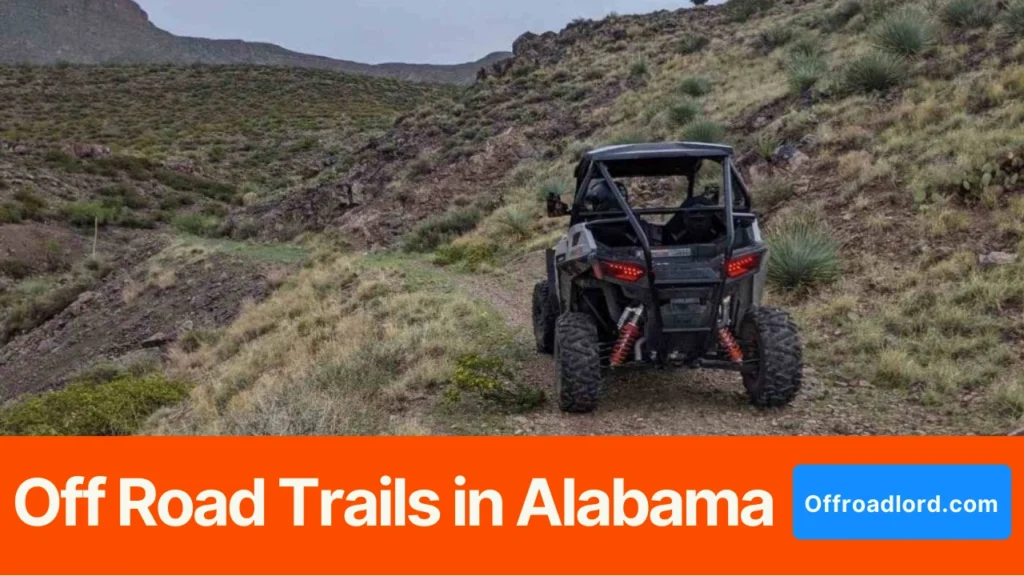
Best off road parks and trail systems in Alabama
Before you load up, one big legal note for Alabama: in the National Forests, ATVs and OHVs are only allowed on two designated trail systems (Kentuck ORV Trail and Flint Creek Multiple-Use Trail). Everything else is roads or not legal.
Top Trails OHV Park (Lincoln, AL)
- Quick overview: My go-to “big weekend” pick. Good mix for families, groups, and riders who want to camp and ride late.
- Vehicles allowed: ATVs, motorcycles, and SxS are clearly expected. The rules also call out tire size, helmets, and belts.
- Terrain: Their own park info highlights 100+ miles of OHV trails plus a 12-mile single-track loop.
- Difficulty: Rider comments on their site mention green trails/roads for easier cruising plus hills and challenges when you want them.
- Hours:
- Wed 8am–10pm
- Thu 8am–all night
- Fri 24 hours
- Sat 24 hours
- Sun close 5pm
- Fees (as posted):
- Adult (19+) $20/day
- Kids 7–11 $5/day
- Kids 6 & under free
- Vehicle fee: $5 per day (no vehicle fee for annual members)
- Rules that matter (highlights):
- Speed limit 15 mph on roads
- Tire size must be under 36 inches (sidewall height)
- Helmets required for 4-wheelers + motorcycles
- Seat belts/harnesses required in SxS
- No alcohol and no glass bottles
- No firearms or fireworks
- Camping: They offer camping with online reservations through their camping partner page.
- My notes (based on rider feedback posted on their site):
- People keep praising the staff and how clean the place is.
- Multiple riders call out a good mix of trails and hills, and that you can camp on-site and roll right into the park.
- “Wash bays” get mentioned. That’s huge if you hate loading a mud brick onto your trailer.
Official links:
https://toptrails.net/park-hours-and-rules/
https://toptrails.net/camping/
https://toptrails.net/about/
The Ridge Outdoor Adventure Park (Springville, AL)
- Quick overview: Best “all-in-one” spot near Birmingham. Trails, single track, and motocross practice tracks in one place.
- Vehicles allowed: Dirt bikes, ATVs, and SxS (they market directly to these).
- Terrain: Officially described as open fields, tight woods, fire lanes, hill climbs, creeks, rocks, and big elevation changes.
- Trail mileage (as posted):
- Trails: ~35 miles (one-way marked)
- Single track: ~15 miles (they call it “the most technical you’ll find”)
- Weather closures: They explicitly say to call before you drive because they may close after heavy rain.
- Riding times (posted): Fri/Sat/Sun 9am–6pm (and “9–5 during winter” noted).
- Day fees (posted):
- Rider $20/day
- Non-rider/passenger $5/day
- Riders 8 and under $5/day
- Key rules (from their riding rules document):
- Helmets mandatory for riders and passengers
- No alcohol
- Ride marked trails only (one-way routes + speed limits enforced)
- Speed limit 5 mph in pedestrian areas
- No riding on paved roads/shoulders (they list a $200 fine)
- Camping & amenities (posted):
- Primitive camping: $7 per person or $20 total (whichever is less)
- RV sites: $35/night (50 amp), $30/night (30 amp)
- Bathrooms + hot showers mentioned in multiple places.
- Cabins (posted):
- Rustic cabins with power/heat/AC; one cabin notes no running water but next to bath house.
- My notes (how I’d plan it):
- This is the spot where I schedule two days. One day for the single track. One day for the easier trail miles and play areas.
- If it’s been raining hard, I’m calling first. They mean it.
Official links:
https://www.ridgeriding.com/riding-info
https://www.ridgeriding.com/membership.htm
Hawk Pride Mountain Offroad (Tuscumbia, AL)
- Quick overview: This is Alabama’s loud answer to “I want rock.” If your group has crawlers and SxS, it’s a solid weekend basecamp.
- Vehicles allowed: Their own description is built around rock buggies/4x4s plus “miles of trail” for ATV riders.
- Terrain: They advertise 120+ rock crawling trails, plus mud riding areas and trail miles.
- Hours (posted): Fri/Sat 8am–10pm, Sun until 5pm (with weekday special arrangements for cabins/RV).
- Admission (posted):
- $20 per person per day
- Kids under 10 free
- 2-day $30, 3-day $40, 4-day $50
- Camping (posted):
- RV spots with water + 50 amp and a dump station near bath house.
- “Dry camping” $10 per evening.
- My notes (based on what they emphasize + what riders chase here):
- I treat this place like a crawl park first. Bring a spotter if you’re new to ledges.
- If you’ve got a mixed-skill group, plan a morning on the easier lines, then let the experienced rigs go hunt the harder rock.
Official links:
https://www.hawkpridemountainoffroad.com/Boggs & Boulders Off Road Park & Campground (Brooklyn/Andalusia area, AL)
- Quick overview: Big-property vibe. This is one of the biggest “ride, camp, repeat” parks in south Alabama.
- Size (as advertised): 2,000 acres and 250 miles of trails (their claim).
- Hours/check-in (posted):
- Mon–Thu closed
- Fri 8:00am–11:30pm
- Sat 12:00am–11:30pm
- Sun: no check-ins unless scheduled event/holiday
- Check-out 11:00am
- Waivers (posted):
- Under 19 must have a minor waiver; if not with legal parent/guardian, waiver must be signed and notarized.
- Adults (19+) must bring valid photo ID.
- Camping (posted examples):
- 50 amp sites: $40/night (plus admission), includes power/water/sewer; no tents in 50 amp area.
- 30 amp sites: tent camping allowed; pricing varies by tents vs camper (plus admission).
- No generators in 30/50 amp campgrounds.
- Events: They run big holiday weekends and themed rides (posted schedule).
- My notes (based on how riders talk about it in reviews and how the park is set up):
- People come here for variety. Expect everything from easy cruise trails to spots that get rowdy when it’s wet.
- On event weekends, assume it’s busy. I plan early check-in and a bigger “camp comfort” setup.
Official links:
https://boggsandboulders.com/
https://boggsandboulders.com/waivers-and-rules/
Bama Slam Off Road Trails (New Brockton, AL)
- Quick overview: Mud-first. If your group wants the social weekend with plenty of splash, this is the style.
- What they advertise: Their “The Mud” page is positioned around mud riding and off-road trails, and they promote it as a destination tied to the Bama Slam venue.
- My notes (based on typical rider expectations + how they market it):
- I’d show up with tires and recovery gear picked for slick clay and ruts, not rock crawling.
- Call ahead after big storms. Mud parks can change overnight.
Official links:
https://bamaslamsaloon.com/explore/themud/Stony Lonesome OHV Park (Bremen, AL)
- Quick overview: North Alabama staple. Big acreage, mixed-use feel, and a strong focus on keeping alcohol out of the riding mix.
- Size (posted): 1,473 acres (their Facebook page).
- Hours (posted on their site):
- Sun/Mon 8:30am–5pm
- Fri/Sat 8:30am–6pm
- Closed Tue–Thu
- Alcohol policy (posted):
- They reinforce a zero-tolerance alcohol policy and talk about cooler checks in official posts.
- Camping/lodging: Their official materials include cabin rentals (their cabin PDF was timing out when I tried to open it directly, but the rate snippet is visible in search).
- My notes (from rider comments + what the park pushes):
- This is a good “ride a little of everything” park. People mention mud and trail variety a lot.
- I’d treat their alcohol policy as serious. Don’t gamble your weekend on getting tossed.
Official links:
https://stonylonesomeohv.us/Kentuck OHV Trail (Talladega National Forest, USFS)
- Quick overview: Best legal public-land ATV option in central Alabama when it’s in-season.
- Vehicles allowed (posted): ATV and motorcycle use is specifically called out.
- Trail system (posted): 4 loops totaling 23 miles.
- Difficulty (posted): Easy-to-moderate overall, with some steeper grades, tight turns, rocks, and log obstacles on harder sections.
- Season: April 1–December 31 (closed seasonally Jan 1–Apr 1).
- Legal note: USFS says Kentuck is one of the only two designated ATV/OHV trail systems in Alabama’s national forests.
Official links:
https://www.fs.usda.gov/r08/alabama/recreation/kentuck-ohv-trailheadFlint Creek Multiple-Use Trail (Bankhead National Forest, USFS)
- Quick overview: Best legal public-land ride in north Alabama if you want a shorter system and you fit the width rules.
- Trail system (posted): 16 miles total.
- Vehicles allowed (posted): Motorcycles and ATVs less than 50 inches wide (also horses, bikes, hiking).
- Season: Listed as all year.
- Legal note: USFS says Flint Creek is one of the only two designated ATV/OHV trail systems in Alabama’s national forests.
Official links:
https://www.fs.usda.gov/r08/alabama/recreation/trails/flint-creek-multiple-use-trailBuck’s Pocket State Park OHV Trail (Fort Payne area)
- Quick overview: Scenic, slower state-park style trail. Great if you want views and a calmer pace.
- Trail system (posted): 6.3 miles along beech/hardwood forest, paralleling South Sauty Creek, with an additional 2.3-mile continuation mentioned.
- Fees (posted):
- $10 per OHV operator day use
- $5 per OHV for registered campers (per stay)
- Annual pass options: $100 individual, $150 family
- Vehicle limits (posted): No full-size vehicles (no Jeeps/trucks/rock crawlers).
- Rules that matter (posted):
- Helmets required for all OHV users
- Seat belts required where applicable
- My notes: This is where I send people who want legal riding but also want to be back at camp before dark with clean gear. It’s designed to be a “slow ride,” and that’s the point.
Official links:
https://www.alapark.com/parks/bucks-pocket-state-park/ohv-trailWhere can you ride legally in Alabama?
This is the part most “best trails” lists skip. Alabama has great riding, but the legal lines are clear.
1) Private OHV parks and private trail systems
These are the easiest “100% meant for riding” options.
- You can ride ATVs, UTVs, dirt bikes, and sometimes full-size 4x4s if the park allows it.
- You ride under their rules. Think waivers, hours, day passes, noise limits, helmets, seat belts, and alcohol bans.
- My rule: if a place has a staffed gate and written rules, it’s usually the least stressful way to stay legal.
(Examples: Top Trails, Choccolocco, The Ridge, Stony Lonesome, etc. I cover the big parks in the previous section.)
2) National Forests in Alabama (USFS)
If someone tells you “just go ride the National Forest,” they’re wrong most of the time.
- The Forest Service has a standing notice: ATVs and OHVs are only allowed on two designated trails in Alabama’s national forests. Those are:
- Kentuck ORV Trail (Talladega NF, Talladega District)
- Flint Creek Multiple-Use Trail (Bankhead NF)
- The same notice also says there are no designated ATV/OHV trails on:
- Conecuh National Forest
- Talladega NF Shoal Creek District
- Talladega NF Oakmulgee District
- Tuskegee National Forest
- Citations are real. The Forest Service explicitly warns that law enforcement will issue citations to illegal ATV/OHV riders.
What about Forest Service roads?
- The USFS notice says registered and state licensed ATV/OHVs are permitted on open Forest Service roads (not trails).
- USFS also says if you’re on roads open to “large vehicles,” you and the vehicle have to meet applicable state requirements.
My practical takeaway: if your machine is not truly road-legal, I treat Forest Service roads like “no-go” unless the local district confirms otherwise in writing.
3) Alabama State Parks
State parks are “designated trail only.” Two places matter for motorized riding.
Buck’s Pocket State Park OHV Trail (NE Alabama)
- Full-size vehicles are not allowed. They call out Jeeps, trucks, and rock crawlers by name.
- OHVs must stay on the designated OHV trail.
Lakepoint State Park (SE Alabama)
- ORV Course: a 6-mile course with novice and advanced paths. It’s for side-by-sides with a roll cage.
- Motorized Nature Trail: a 3.1-mile “diverse use” trail for golf carts and similar low-decibel motorized vehicles.
4) Private land (permission only)
- If it’s not a park, not a designated public trail, and not your property, you need clear permission.
- I like written permission. A text message beats a handshake if there’s ever a dispute.
Permits, passes, registration, and rules (Alabama)
Here’s what I actually check before I go. I’d rather spend 10 minutes at home than get turned around at the gate.
Alabama ATV/UTV registration (voluntary, but useful)
Alabama lets you voluntarily register ATVs and UTVs through ALEA.
- Public use registration: $45 + $2.50 issuance, good for 3 years. ALEA defines “public use” as used on designated areas for off-road public use.
- Private use registration: $15 + $2.50 issuance, good for 3 years. ALEA defines “private use” as used exclusively for private/ag use or on private property.
- Duplicate/transfer: $5 (ALEA says to contact them directly).
My advice: if you ever ride parks or public systems, I’d do the public-use registration. It avoids arguments and it’s cheap insurance for ownership paperwork.
Trail and day-use fees you’ll actually see (USFS + State Parks)
USFS (National Forests in Alabama)
- Kentuck ORV Trail: $5 per operator, season Apr 1–Dec 31.
- Flint Creek Multiple-Use Trail: $3 per operator, open all year.
Buck’s Pocket State Park OHV Trail
- $10 per OHV operator (day use)
- $5 per OHV for registered campers (per stay)
- Annual pass options: $100 individual, $150 family
- Payment options are spelled out (park office, card-only kiosk, or cash honor box).
Lakepoint State Park ORV Course
- It’s a 6-mile ORV course with posted hours, and it includes package options (camping or hotel) with “unlimited riding” language.
- It closes during severe weather, including rain.
Core rules I see over and over (and I follow them)
These come straight from the land managers.
On National Forest land (USFS rules)
- Ride only on areas, roads, and trails designated open to OHVs.
- If you’re on roads open to “large vehicles,” you must meet state vehicle/operator requirements.
- Your vehicle must have a state-approved muffler and/or spark arrester.
- No joyriding in developed campgrounds. OHVs are for entering and leaving only.
- Don’t ride in a way that damages land, wildlife, or vegetation.
In Alabama State Parks (examples: Buck’s Pocket and Lakepoint)
- Helmets required. Seat belts required where applicable.
- Stay on the designated trail/course.
- No alcohol on the OHV trail/course.
- Size limits and “no full-size rigs” rules are real.
- Buck’s Pocket: max 83 inches wide, and no Jeeps/trucks/cars on trails.
- Lakepoint ORV Course: 33–72 inches, and no Jeeps/trucks/cars on trails.
What I bring to stay legal (quick checklist)
- Driver’s license and photo ID
- Card and some cash (kiosks and honor boxes happen)
- Helmet (and eye protection if I’m on a SxS course that requires it)
- Spark arrestor and a decent muffler for public land riding
- Proof of any required pass or fee (Kentuck, Flint Creek, state park fees)
- For minors: whatever waiver rules the property requires (parks vary)
Best time of year to ride in Alabama
If you want the best mix of traction, comfort, and fewer “we’re closed” surprises, I plan Alabama rides in late spring and fall.
My quick season pick
- Best overall: April, May, October, early November
- Most predictable “dry-ish” month in north/central Alabama: October
- Most uncomfortable: mid-June through mid-August (heat + humidity)
- Most likely to wreck a weekend: long, soaking rains that turn parks into a closure or a rut fest
What the weather really does to trails here
- Spring (March–May): Great temps. Trails can be prime. But spring is also when Alabama can get severe storms. If storms are in the forecast, I do not gamble with a long drive.
- Summer (June–August): Hot. Humid. Pop-up thunderstorms. Some parks shut down tracks when it gets too wet. I ride early, drink more water than I think I need, and plan more breaks.
- Fall (September–November): This is my favorite window. Cooler air. Less humidity. October is often the driest month around Birmingham. Late fall can still bring strong storms, so I keep weather alerts on.
- Winter (December–February): Temps are usually manageable, but rain and soft ground are the issue. Mud holes grow. Clay gets slick. Some public systems and parks still operate, but I expect more “wet trail” days.
Public trail seasons and closures you need to know
- Kentuck OHV Trail: Open April 1 to December 31. Closed seasonally in winter.
- Flint Creek Multiple-Use Trail: Listed as open all year.
- Lakepoint ORV Course: Closes during severe weather, including rain.
- The Ridge: They ask you to call before you drive if rain is possible. They may close tracks or the whole park when it’s too wet.
My planning rules for Alabama
- If rain is forecast, I call first. Especially for parks with tracks and clay soil.
- I plan around severe weather windows. Alabama’s peak tornado months are a real thing. I treat March through May, plus November, with extra respect.
- I bring more water than I think I need. Summer humidity turns a simple ride into a heat problem fast.
- I keep a backup plan. If the park closes, I want a hiking spot, a scenic drive, or a campground plan B.
Trail difficulty and vehicle setup guide
Alabama riding ranges from easy, scenic loops to legit rock crawling. The fastest way to have a good day is to match vehicle width, terrain type, and skill level before you unload.
Step 1: Pick your “difficulty lane”
I use this simple scale when I’m choosing a place.
- Beginner: smooth dirt, gentle grades, wide turns, predictable traction
- Intermediate: tighter woods, steeper climbs, rocks/roots, deeper ruts, mud holes
- Advanced: big ledges, off-camber climbs, deep mud, winch lines, body damage risk
A lot of parks mark trails by difficulty. Kentuck also spells out that it has easier sections plus more difficult segments with rocks, logs, steeper grades, and tight turns.
Beginner-friendly picks (where I send new riders)
- Buck’s Pocket State Park OHV Trail: A controlled, designated trail in a state park setting. Also very clear about what is not allowed (no full-size rigs).
- Flint Creek (USFS): Good option if you fit the width rule and want a legal public trail that’s listed as open all year.
- Kentuck (USFS): Start on the easiest loop sections first. Work up from there.
- The Ridge: Great for mixed groups because they have beginner areas plus marked trails. Just pay attention to weather closures.
Intermediate riding (most riders live here)
This is the sweet spot for most ATV and UTV owners.
- Expect mud holes, ruts, tight woods, and short steep climbs.
- Ride one “step harder” only after you have:
- 4WD that actually works
- good tires
- a real recovery plan
- another rider with you
Kentuck is a good example of a system that goes from easy into more difficult terrain as you move through the loops.
Advanced riding (bring tools, not hope)
This is where rock parks and obstacle parks shine.
- Plan for winching, spotting, and breakage.
- Keep speeds low. Most damage comes from throttle, not the trail.
- If your rig is your daily driver, think hard before you chase the hardest lines.
Step 2: Confirm your vehicle fits the trail
Width and “full-size allowed” rules matter more in Alabama than most people think.
- Flint Creek: ATVs must be under 50 inches wide.
- Buck’s Pocket: OHVs must be 83 inches or smaller. No Jeeps, trucks, or cars on the trails.
- Lakepoint ORV Course: ORVs must be 33 to 72 inches wide. No Jeeps, trucks, or cars. Roll cage and seat belts required.
- Kentuck: Built for ATV and motorcycle style use. It’s not a full-size 4×4 trail system.
- Top Trails (private park example): They restrict entry by tire size and require seat belts or harnesses in side-by-sides.
My rule: measure your machine. Do not trust the model name.
Step 3: Setup tips by vehicle type
Dirt bike
- Priorities: cooling, brakes, hand protection
- Carry: tube or plug kit (depending on your setup), pump, and basic tools
- If you ride public land, keep your exhaust legal and trail-friendly
ATV
- Priorities: tire choice, winch or tow plan, waterproofing
- 4WD helps a lot in Alabama clay and ruts
- If you ride a public trail with a width rule, this is where a true 50-inch machine matters
UTV
- Priorities: belts/harnesses, spare belt if you run CVT, tow points
- Know your width. Many popular UTVs are wider than people assume.
- Bring a windshield plan for winter and a dust plan for dry fall weekends
Jeep and full-size 4×4
- Priorities: recovery points front and rear, skid protection, tire sidewall strength
- Understand that some “OHV trails” in Alabama are explicitly not for full-size rigs
- If you are going to a crawl park, I plan for: winch, tree saver, and a spotter
Minimum gear I recommend for every Alabama ride
- Helmet and eye protection
- Gloves and over-the-ankle boots
- 2 liters of water per person minimum in warm months
- First aid kit
- Offline map on your phone plus a backup battery
- Tow strap and 2 shackles
- Tire repair kit and a way to air up
- For groups: a simple comms plan (even if it’s just “Channel X on radios”)
Map resources for Alabama off-road riding
I treat maps like cheap insurance. They keep me legal. They keep me found. And they keep my weekend from turning into a tow bill.
My “don’t get burned” map stack for Alabama
1) Start with the legal map (public land).
- If I’m riding National Forest land, I pull the Motor Vehicle Use Map (MVUM) for the right district.
- I assume anything not shown on the MVUM is closed to motor vehicles.
- I download it to my phone and I also keep a paper copy in the truck.
2) Add an orientation map (so the MVUM makes sense).
- MVUMs are great for “legal open routes,” but they’re not always great for trip planning.
- I pair the MVUM with the free USFS recreation map PDFs for the forest or district so I can see campgrounds, trailheads, and main roads.
3) Use the USFS OHV hub pages to confirm what’s actually open.
- Before I leave, I check the official USFS OHV pages for Alabama because they post current notes and they clearly point to the two main trail systems.
- I also check the individual trail pages for Kentuck and Flint Creek for season, basic facilities, and reminders.
4) Handle passes before I lose cell service.
- For Kentuck, I buy the pass on Recreation.gov.
- I download the Recreation.gov app.
- I print the pass or save it offline. I do not assume I’ll have service at the trailhead.
- I also plan for parking limits. A pass does not magically create a spot.
Alabama public-land map resources I actually use
- USFS Visitor Maps & Guides (Alabama):
- Free downloadable forest and district recreation maps.
- Direct links to the Alabama MVUM PDFs by district.
- Notes on using Avenza to find and download geo-referenced maps for offline use.
- USFS OHV page for Alabama:
- Quick hub for the OHV opportunities and the official trail pages.
- USFS Recreation Fee Schedule PDF:
- I use it as a “what fees apply where” reference before I go.
Alabama State Parks map resources
If I’m riding a state park ORV/OHV area, I use the park’s own page first. Not a forum. Not a directory.
- Buck’s Pocket State Park OHV Trail page
- Good for the basics: trail info, fees, and what’s allowed.
- Lakepoint State Park ORV Course page
- It includes an ORV course map image right on the page.
- It also lists the key rules that matter when you roll in.
- ADCNR / Alabama State Parks interactive map
- Useful when I’m trying to find nearby parks, campground options, and park contact info fast.
Private OHV parks
Private parks change fastest. Events, rain closures, and trail reroutes happen.
Here’s how I map them:
- I pull the official website first.
- Then I check their official social page for same-week updates.
- If they have a trail map at the gate, I grab it. I take a photo. I keep it on my phone.
I like apps for planning and navigation, but I never treat them as the final word on legality.
- onX Offroad
- Great for discovery and offline navigation.
- I still cross-check public-land routes with MVUM and closures.
- Trails Offroad
- Strong for 4×4-style guides and trip planning.
- Avenza Maps
- Best for offline geo-referenced PDFs like USFS maps.
- My rule: if an app line conflicts with an official map or a closure notice, the app loses.
Safety, etiquette, and staying legal
I want places to stay open. That means riding smart, riding legal, and not being the guy who turns one weekend into a new closure sign.
The safety rules I actually follow
- I ride with a plan. Meet time. End time. Someone at home who knows where we are.
- I bring offline navigation. Phone service is not a plan.
- I ride with at least one other vehicle on harder terrain. One machine can break. Two can recover.
- I stop early when storms look real. Alabama weather can flip fast.
- I don’t “send it” into water. Clay bottoms, hidden holes, and washed-out edges are how rigs get totaled.
- I wear the right stuff. Helmet and eye protection when required. Seat belts and a real harness in SxS. Boots every time.
- I keep speeds low around people, camps, and parking. Dust and close calls are what bring complaints.
- I carry basic recovery. Strap, shackles, a way to air back up, and real tow points. If I’m crawling, I add winch gear.
- I pack more water than I think I need. Heat issues are common and they start earlier than people admit.
- I don’t mix alcohol and riding. Period.
Trail etiquette that keeps access open
I follow the Tread Lightly framework because it matches what land managers want.
- Stay on designated routes. No new lines. No cutting switchbacks.
- Go over, not around obstacles. Going around widens trails and kills vegetation.
- Avoid wet, muddy trails when possible. That’s how ruts deepen and trails get closed.
- Respect other users. Slow down. Give space. Keep noise reasonable.
- Keep gates as you found them and respect private property boundaries.
Staying legal in Alabama without overthinking it
Here’s my simple checklist.
On National Forest land
- I only ride where the Forest Service says motorized travel is allowed.
- If I’m unsure, I default to the MVUM and the local district info.
- If a trail system requires a pass, I buy it and display it the way they ask.
On Alabama State Parks ORV/OHV areas
- I follow the width limits and the “no full-size vehicles” rules where posted.
- I stay on the designated course or trail.
- I follow helmet, seat belt, and roll cage requirements where listed.
- I respect weather closures. If they close for rain, I’m not arguing.
On private OHV parks
- I follow posted rules even if they’re stricter than what I’m used to.
- I handle waivers ahead of time for minors.
- I don’t ride outside the property boundaries. Ever.
Private land warning (this matters in Alabama)
A huge amount of Alabama is private. If it’s not clearly public land, and it’s not a paid OHV park, I assume it’s private.
- I get permission first.
- I don’t follow random tracks through the woods and hope for the best.
FAQ – Off Road Parks in Alabama
Do I need an OHV sticker or registration to ride in Alabama?
Alabama offers voluntary ATV and recreational OHV registration. Some private parks do not care. Others may want proof of ownership or a waiver. On public systems, I bring my ID, any pass receipt, and whatever paperwork I have for the machine. It avoids headaches at the trailhead.
Where can I ride a full-size Jeep in Alabama?
For full-size rigs, I stick to private ORV parks that specifically allow 4x4s. Places like Choccolocco Mountain ORV Park and Hawk Pride are built for that style of riding. On
the flip side, Buck’s Pocket State Park OHV Trail is not for full-size vehicles, and Alabama National Forest OHV options are not “Jeep trail networks.” If your goal is crawling, pick a park that markets to crawlers and has posted rules.
Are UTVs street legal in Alabama?
Most UTVs are built for off-road use, and voluntary OHV registration does not automatically make a UTV street legal. Some towns and counties may allow limited use on certain roads, but it varies and can change fast.
I always check the local rules before I plan any “ride from camp to town” idea. When in doubt, trailer it.
What’s the best OHV park near Birmingham?
If I’m keeping it close to Birmingham, The Ridge is usually my first pick for a day trip because it’s built around dirt bikes, ATVs, and SxS and has trails plus tracks.
If we want bigger acreage and longer riding days, Top Trails is worth the drive for a weekend. If you’re taking newer riders, I like parks that have clear signage and easier loops so nobody gets pushed into hard stuff.
What’s the best place to ride near Huntsville?
For a legal public-land option up north, Flint Creek is the most straightforward if your ATV fits the width rule. For a scenic, slower state-park ride, Buck’s Pocket can be a fun half-day. For a bigger “all-day” park vibe, riders often head toward north/central Alabama OHV parks like Stony Lonesome depending on the weekend schedule.
Do Alabama National Forest OHV trails require a pass?
Yes. The designated OHV trail systems typically require a per-operator daily fee. I buy what I need before I roll in, save it offline, and I keep a screenshot on my phone in case I lose service. Also, one of the two main public systems is seasonal, so I always confirm dates before I drive.
What off-road trails are open year-round in Alabama?
Flint Creek is commonly listed as open year-round, while Kentuck is seasonal. Private parks vary. Some run most of the year but close temporarily for heavy rain, events, or maintenance. My move is simple: check the park’s official page or social update the day before, then call if weather looks sketchy.

Calvin Anderson, founder of Off-Road Lord, is a seasoned off-roading enthusiast from Tucson, Arizona. With over a decade of hands-on experience and a deep understanding of off-roading vehicles and trails, Calvin’s insights provide a trusted guide for fellow adventurers.